
Executive Summary (Key Takeaways)
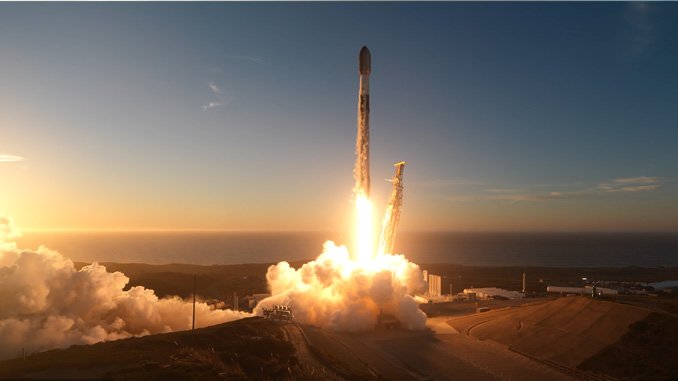
- Mission & Launch Window: A SpaceX Falcon 9 rocket successfully launched the classified USSF-432 (R-4) mission from Vandenberg Space Force Base, California, at 4:48 p.m. PST (0048 UTC).
- Satellite Payload: This mission continues the U.S. Space Force’s secretive “R” launch series. According to orbital catalog records from prior flights, each launch deploys 23 satellites believed to be built on the SpaceX Starshield platform.
- Booster Milestone: First-stage booster B1095 completed its eighth flight—and its West Coast debut following a cross-country transfer from Florida—landing safely on the drone ship Of Course I Still Love You.
VANDENBERG SPACE FORCE BASE, Calif. — SpaceX launched another batch of satellites for a clandestine U.S. Space Force program aboard a Falcon 9 rocket from California on Friday afternoon, continuing a high-cadence deployment of national security assets into low Earth orbit.
Liftoff from Space Launch Complex 4 East (Pad 4E) at Vandenberg Space Force Base occurred at 4:48 p.m. PST (7:48 p.m. EST / 0048 UTC). Upon departing the central California coastline, the launch vehicle followed a south-easterly trajectory over the Pacific Ocean.
The flight was originally scheduled for Nov. 1 but underwent multiple postponements. The initial scrub was triggered by cascading delays from the commercial Starlink 15-18 launch, followed by subsequent holds for operational reasons that officials did not disclose.

Inside the USSF-432 Mission and the “R” Launch Series
In public procurement and launch documents, the mission carries the primary designation USSF-432, alongside the secondary program identifier R-4. This rapid-deployment series of “R” missions commenced in August and has maintained a tight operational schedule out of California.
Based on public launch manifests and orbital tracking logs, the complete timeline of the “R” mission series is detailed below:
| Mission Designation | Series Identifier | Launch Date | Launch Site | Cataloged Payload |
| USSF-366 | R-1 | Aug. 16 | Vandenberg (SLC-4E) | 23 Satellites |
| USSF-153 | R-2 | Sept. 10 | Vandenberg (SLC-4E) | 23 Satellites |
| USSF-385 | R-3 | Sept. 26 | Vandenberg (SLC-4E) | 23 Satellites |
| USSF-432 | R-4 | November (Latest) | Vandenberg (SLC-4E) | ~23 Satellites (Projected) |
Payload Analysis: Starshield Architecture and Orbital Sensing
Officially, the U.S. Space Force has declined to disclose technical specifications, orbital parameters, or operational objectives for the “R” series. Furthermore, neither SpaceX nor the Space Force has publicly confirmed successful payload deployments on the previous flights in the sequence.
However, independent orbital tracking and defense analysis provide clear insights into the program’s scope:
- Orbital Catalog Entries: Public orbital tracking catalogs indicate that each prior “R” launch consistently placed exactly 23 satellites into orbit.
- Starshield Platform: Space industry analysts assess that these spacecraft are built on SpaceX’s Starshield platform—a militarized, government-tailored derivative of the commercial Starlink satellite bus designed to host classified payloads, enhanced cryptographic communications, and earth-observation sensors.
- Space Based Sensing and Targeting: According to Jonathan McDowell, an astrophysicist and widely respected tracker of global spaceflight activities, the “R” series satellites are a core component of the U.S. Space Force’s Space Based Sensing and Targeting program, aimed at providing persistent tracking and targeting capabilities from orbit.
Booster B1095 Flight Heritage and SpaceX’s West Coast Shift
Beyond its classified payload, the USSF-432 mission highlighted the logistical flexibility of SpaceX’s reusable fleet.
- Eighth Flight and Recovery: The mission was powered by Falcon 9 first-stage booster B1095, which completed its eighth launch and landing. Following stage separation, B1095 executed a successful autonomous landing aboard the drone ship “Of Course I Still Love You,” stationed in the Pacific Ocean off the coast of Baja California, Mexico.
- Cross-Country Reassignment: Prior to Friday’s liftoff, all seven of B1095’s previous missions launched from the East Coast at Cape Canaveral Space Force Station and Kennedy Space Center in Florida. The booster was transported cross-country to California after launching the GPS III-8 navigation satellite mission in April.
- Strategic Reallocation for Starship: The transfer of East Coast boosters to California reflects a broader operational shift. The bulk of recent Falcon 9 launches have taken place from Vandenberg as SpaceX concentrates its Florida engineering teams and pad infrastructure on preparing for the first Starship launch from the Space Coast.
- Photo by SpaceX