
Primary Sources: Qualcomm Technologies Official Release, SpaceX FCC Filings, Exploraphones Research Data
In a monumental shift that redraws the boundaries of the United States telecom industry, SpaceX has signed a multi-year infrastructure partnership with Qualcomm Technologies. Announced on November 4, 2026, the deal will see Qualcomm supply the heavy-duty terrestrial hardware for SpaceX’s upcoming Starlink Mobile 5G network across the U.S.
This isn’t just another satellite emergency-messaging feature. By building out its own massive ground-based cellular footprint, SpaceX is transforming from an orbital internet provider into a fully fledged, hyper-resilient national cellular carrier—aiming to compete directly with giants like AT&T, Verizon, and T-Mobile.
The Ground Game: Qualcomm’s Tech Powering Starlink Towers
Starting in early 2027, SpaceX will begin the aggressive deployment of tens of thousands of terrestrial base stations. While SpaceX has the sky covered, it needs Qualcomm’s advanced silicon to deliver low-latency, high-capacity cellular performance on the ground.
According to technical specifications released by Qualcomm, the network architecture will utilize:
- Qualcomm Dragonwing Infrastructure Platforms: Specifically leveraging the QRU100 Cellular Platform for massive MIMO radio units and the QDU100 for low-latency baseband processing.
- 64T64R Massive MIMO: The towers will feature 64-transmit and 64-receive antenna configurations, maximizing cellular capacity and building deep indoor penetration.
- AI-Native 6G Readiness: While the hardware will initially deploy advanced 5G, the architectural framework is specifically designed to transition seamlessly into future AI-driven 6G protocols.
Inside the Pocket: The Snapdragon X105 Modem

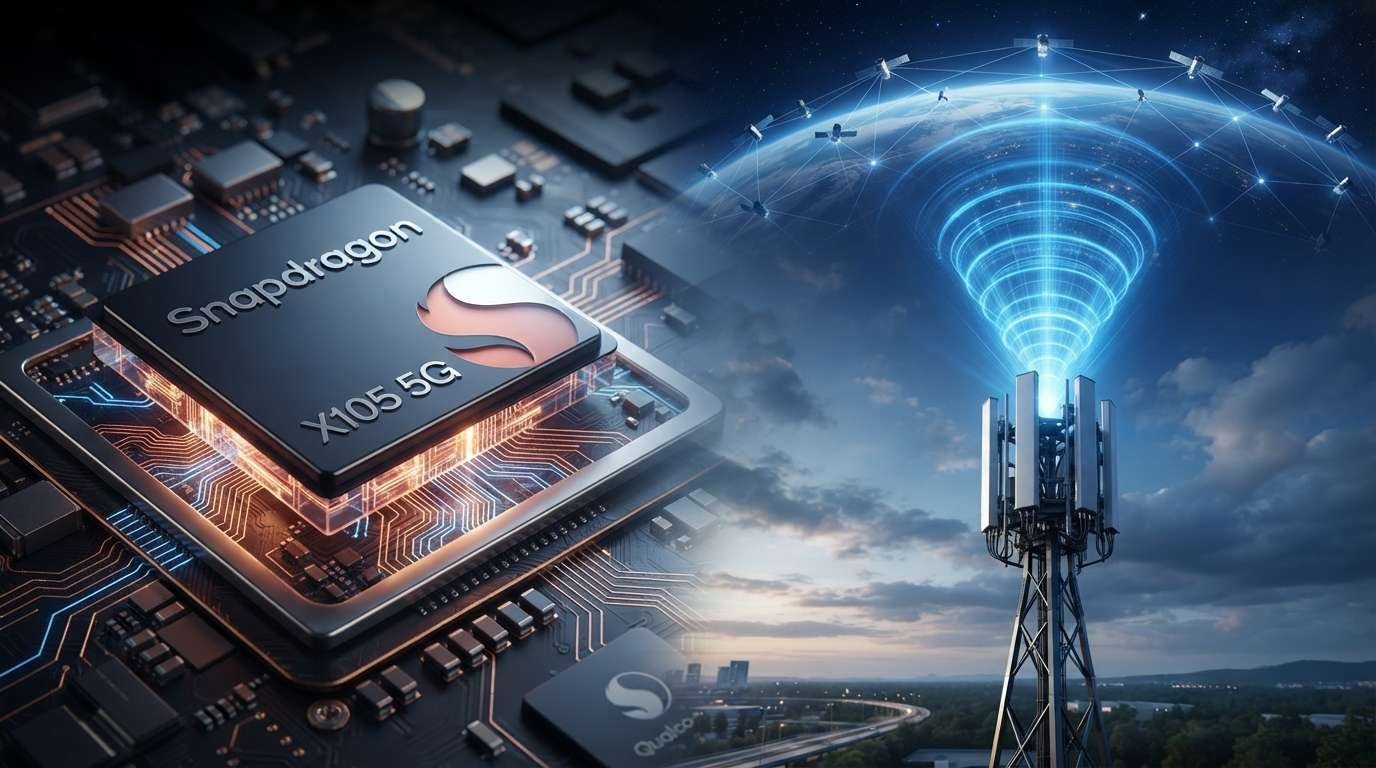
The collaboration extends straight into consumers’ pockets. Qualcomm also unveiled the Snapdragon X105 modem, the industry’s first commercial modem optimized to meet the strict 3GPP Release 19 standards governing satellite 5G technology.
What does this mean for the average user? Future smartphones—likely starting with devices powered by the upcoming Snapdragon 8 Elite Gen 6—will features native, hybrid switching. Your phone will seamlessly pass your active data connection from a Starlink satellite in low-Earth orbit (LEO) directly to a Qualcomm-powered Starlink ground tower without dropping your call or stream.
Exploraphones Analysis: What This Means for the Telecom Market
At Exploraphones, we have spent years testing satellite and mobile technologies in real-world, off-grid environments. Back in October, we surveyed 919 traditional carrier users about Starlink Mobile, and the data showed a clear trend: Price beats coverage. Consumers are desperately waiting for a viable alternative to the big three carriers, provided it doesn’t break the bank.
With this Qualcomm partnership, SpaceX is addressing the ultimate bottleneck of direct-to-cell satellite tech: raw data bandwidth and indoor penetration. Satellites are perfect for filling geographic dead zones, but they cannot handle the dense data demands of a crowded metropolitan city. By combining an orbital constellation with a dense grid of ground towers—bolstered by their pending acquisition of the 800 MHz low-band spectrum—SpaceX is building a hybrid, un-killable network architecture.
Traditional carriers should be deeply concerned. Wall Street has already begun reacting to the announcement, recognizing that Starlink is no longer just a backup option for rural America—it is positioning itself to be your primary mobile network provider.
We will continue to track the FCC filings and hardware rollouts for Starlink Mobile 5G. Stay tuned to Exploraphones for our upcoming hardware deep-dives and live network field tests as the first base stations go live in 2027.